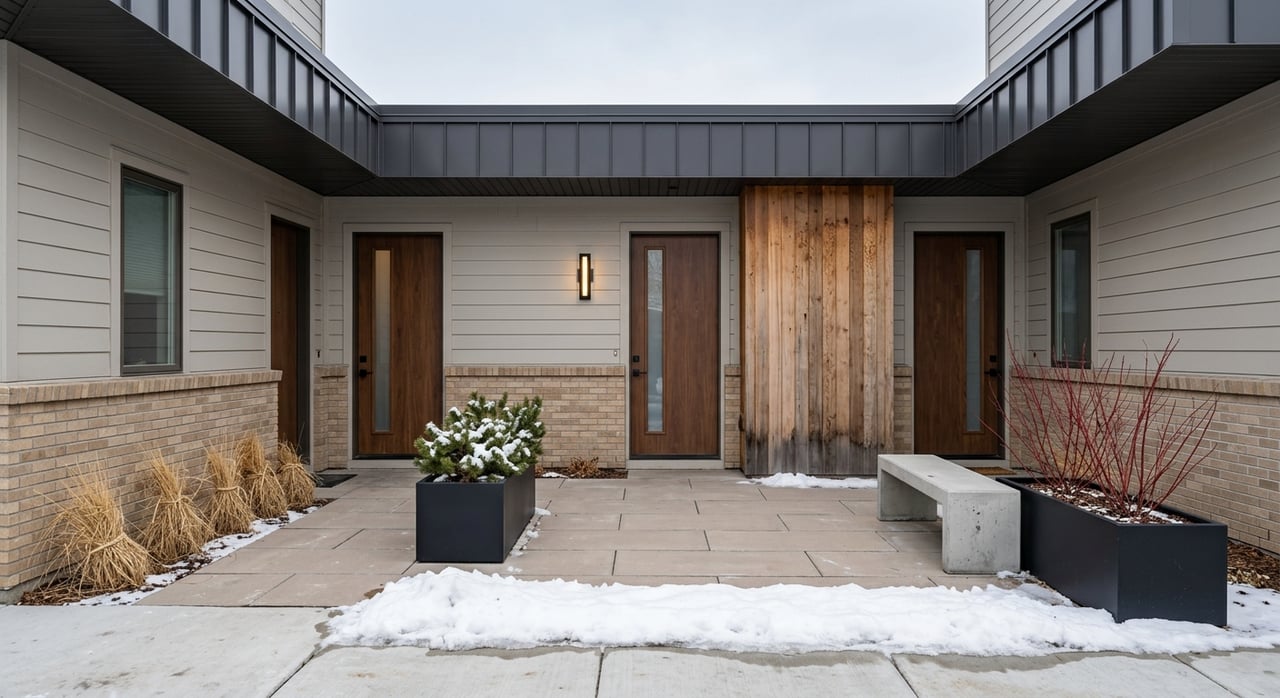
Guide to Buying Fargo ND Condos and Townhomes
April 23, 2026
April 23, 2026
Thinking about buying a condo or townhome in Fargo? The appeal is easy to see: you may get lower-maintenance living, shared amenities, and a simpler day-to-day routine than you would with a detached home. But attached housing also comes with a different set of rules, fees, and financial details that can affect your budget, financing, and long-term plans. This guide walks you through what to check before you tour too far or make an offer, so you can buy with more confidence. Let’s dive in.
One of the biggest mistakes buyers make is assuming the word townhome tells you everything you need to know. It does not. According to Fannie Mae’s condo buying guidance, townhomes, condos, co-ops, and planned developments can all be subject to HOA rules, and some multistory townhomes may be treated as condos.
In North Dakota, a condo is a recorded legal structure. Under North Dakota condominium law, the declaration must be filed with the county recorder and include the land description, floor plans, common elements, limited common elements, and each unit’s fractional interest. That means the legal ownership structure matters more than the building style you see from the street.
If you are buying in Fargo, the practical step is simple: verify what is actually recorded. The Cass County Recorder preserves and provides access to real estate documents, making it the place to confirm what applies to a specific condo or townhome community.
With a detached home, ownership is usually more straightforward. In a condo, North Dakota law generally says your unit is bounded by its interior surfaces, while the common areas are owned by the unit owners according to their proportional interests. That can affect maintenance duties, insurance responsibilities, and how future repairs are handled.
The same law also requires bylaws to address maintenance, assessments, losses, and insurance proceeds. It also says owners must comply with the recorded covenants, bylaws, and rules. In other words, when you buy into a condo community, you are buying both the unit and a shared governance structure.
This is also why a townhome should never be judged by appearance alone. A home with its own entrance and a more private look may still be part of an association with shared rules and financial obligations.
A condo or townhome can be budget friendly, especially if you want less exterior upkeep. But your monthly payment planning needs to include more than principal, interest, taxes, and insurance. CFPB explains that condo or HOA dues are usually paid directly to the association unless they are escrowed, and Fannie Mae notes that dues can support a lower-maintenance lifestyle.
Those dues may cover items such as exterior maintenance, common-area repairs, water, sewer, trash, recreational amenities, insurance, and reserve funding. Compared with a detached home, that means you may pay fewer repair costs directly, but you are also relying on the association’s budgeting and management.
The key point is that the monthly fee is only part of the picture. You also need to understand what that fee covers, what it does not cover, and whether the association has enough money set aside for future repairs.
Low dues can look attractive at first glance, but they do not always tell the full story. North Dakota law says common-expense assessments are a debt of the owner and can become a lien if the association records them with the county recorder. That is one reason document review matters so much in attached housing.
Fannie Mae’s HOA guidance also notes that special assessments may be used for major one-time costs, such as unexpected repairs, replacement of common systems, or disaster-related work. So even if the regular dues seem manageable, you should ask whether there are any approved or pending special assessments.
North Dakota law also says real property taxes and special assessments are levied on each unit rather than on the whole project. For you as a buyer, that means each unit carries its own tax and assessment obligations.
Insurance can be confusing in condo and townhome communities because coverage is often split between the association and the individual owner. Fannie Mae explains that the association may cover exterior damage and common areas, while the owner may be responsible for the interior of the unit.
Before you move forward, confirm what the master policy covers, whether replacement cost is included, and where the deductible exposure falls. This is especially important because a gap in understanding can affect both your monthly budget and your out-of-pocket risk after a loss.
A good rule is not to assume the association policy covers everything. You want clear answers before closing, not after a claim.
In North Dakota, buyers of properties subject to an HOA or condominium project have an important protection. Under the state’s required disclosure statute, the seller must provide a written packet with detailed association information by a mutually agreed date or within ten days of the agreement.
That packet is not just paperwork for the file. It should help you understand how the community operates, what it costs, and whether there are financial or legal issues that could affect your purchase.
Here are some of the most important items to review:
By law, these documents must include information from at least the prior 90 days. That gives you a current snapshot, not an outdated one.
Once you have the packet, focus on the issues that most directly affect affordability, flexibility, and future resale. Fannie Mae recommends asking what the fee is and what it covers, whether there is a reserve study, and whether any special assessments are planned or approved.
You should also ask whether rentals are allowed, whether there are transfer fees, whether parking is assigned or included, and what amenities are truly part of the package. If you are buying with future flexibility in mind, these details matter just as much as the unit’s finishes.
For many Fargo buyers, it is also smart to compare the seller’s packet with the public record through the Cass County Recorder. That extra step can help confirm that the declaration and recorded documents match what you were given.
Condo and townhome financing is not always the same as financing a detached home. HUD states that FHA condo financing requires either an FHA-approved project or single-unit approval, and the project must meet criteria involving insurance, legal status, financial condition, title, and physical condition.
That means some condo communities are easier to finance than others. If you are considering FHA financing, project eligibility can become a major factor in whether a deal works smoothly.
CFPB also notes that lenders may charge slightly more for loans used to buy a condo. It is worth comparing multiple Loan Estimates and sharing accurate property taxes and condo or HOA dues so those estimates reflect the true monthly cost.
Attached housing purchases often involve more moving parts than buyers expect. Fannie Mae points out that your lender, the condo association, and your real estate agent are key resources, and buyers may also want a real estate attorney to review condo documents. CFPB also says buyers may want an attorney to review closing documents before signing.
In practice, the right support team usually includes:
This matters even more if you are a first-time buyer. The right guidance can make a complex purchase feel much more manageable.
If you are buying as an investor, condo and townhome due diligence should go a step further. North Dakota’s disclosure law requires leasing restrictions to be disclosed, and Fannie Mae specifically recommends asking whether the community is renter friendly.
That means you should review leasing caps, rental approval rules, and any transfer fees with extra care. A unit that works well for an owner-occupant may not fit your investment goals if rental restrictions are tight or reserves are weak.
This is one area where careful review upfront can save you from an expensive surprise later.
When you buy a condo or townhome in Fargo, you are evaluating more than the unit itself. You also need to confirm the ownership structure, monthly dues, reserve strength, insurance split, leasing rules, and financing eligibility before you get too far into the process.
That may sound like a lot, but it is also what helps you make a smarter decision. With the right guidance and a clear review of the documents, you can weigh the convenience of attached housing against the rules and costs that come with it.
If you want help thinking through condo or townhome options with a practical, buyer-first approach, connect with Luke Haldis for a conversation about your next move.
Stay up to date on the latest real estate trends.




You benefit from a disciplined, client-first strategy built to protect your interests and grow your long-term wealth. Through proactive outreach and deep local relationships, you gain access to off-market and early opportunities most buyers and sellers never see. Every decision is guided by clarity, transparency, and a proven process designed to help you move forward with confidence and control.