Your Guide to West Fargo New Construction Homes
April 2, 2026
April 2, 2026
If you are thinking about buying a brand-new home in West Fargo, you are not looking at a small corner of the market. New construction is a major part of how the city has grown, especially in the western and southwestern areas. That creates real opportunity, but it also means you need to understand pricing, timelines, contracts, and local costs before you sign. This guide will walk you through what to expect so you can shop smarter and avoid surprises. Let’s dive in.
New construction is built into West Fargo’s growth pattern. According to the city’s planning documents, the housing stock is relatively young, with a median build year of 2002, and 57% of housing units were built between 2000 and 2017. In other words, newer homes are already a big part of the local housing picture, not an exception.
The city also describes a clear pattern in where these homes are located. Older neighborhoods are generally north of Main Avenue and northern Sheyenne Street, while newer neighborhoods are more common south of I-94, where curving streets and cul-de-sacs are more typical. If you are searching for a newer layout, newer infrastructure, or a developing subdivision feel, that southern and western growth area is where you will likely focus.
Two areas stand out in the current conversation. The city identifies The Wilds South as an ongoing master-planned development, and city planning also points to the 32nd Avenue West and Sheyenne Street area as a future mixed-use node that could bring more townhouse or small-scale multifamily options. Builder pages also show active communities in The Wilds and Hadley Meadows.
West Fargo still leans heavily toward detached single-family housing. The city says the large majority of housing is detached single-family, with more than three quarters of all units falling into that category. For many buyers, that means you will still find plenty of traditional single-family new builds in the market.
That said, the market is not limited to one home type. The city’s planning framework supports a broader housing mix, and current builder offerings show attached options such as townhomes and one-level twinhomes. If you want lower-maintenance living or a simpler floor plan, those choices are part of the local new-construction conversation too.
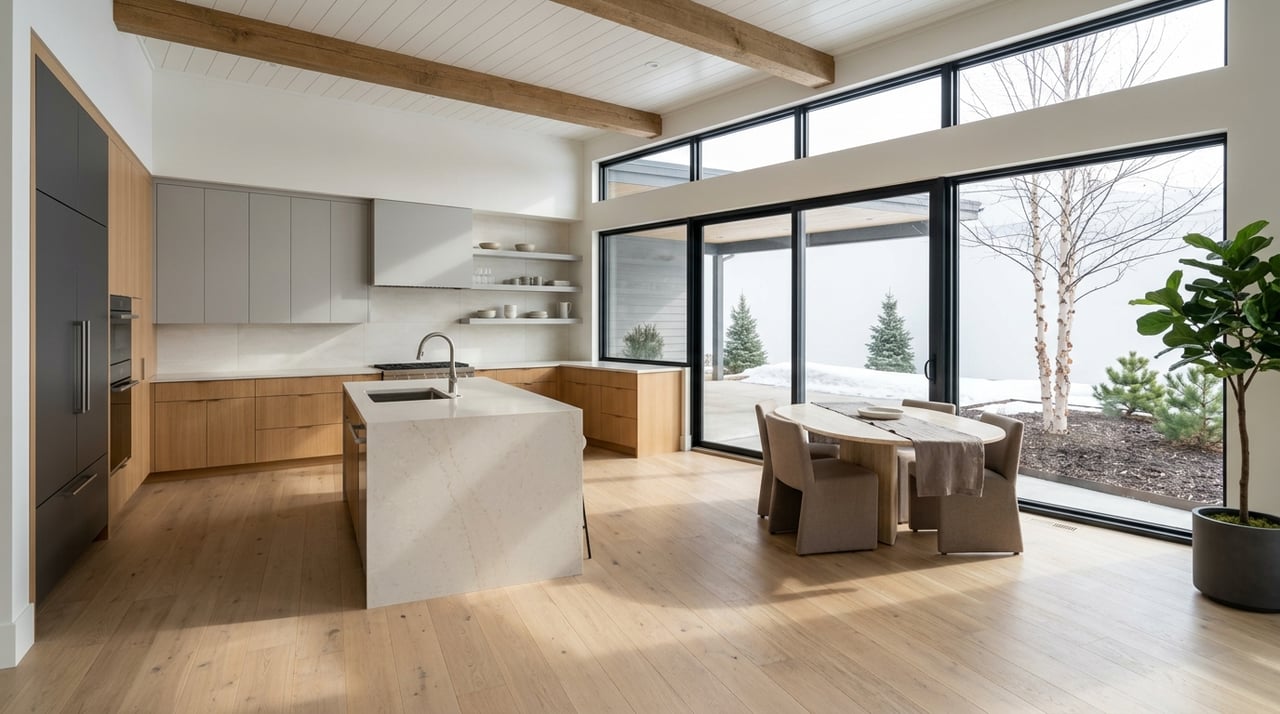
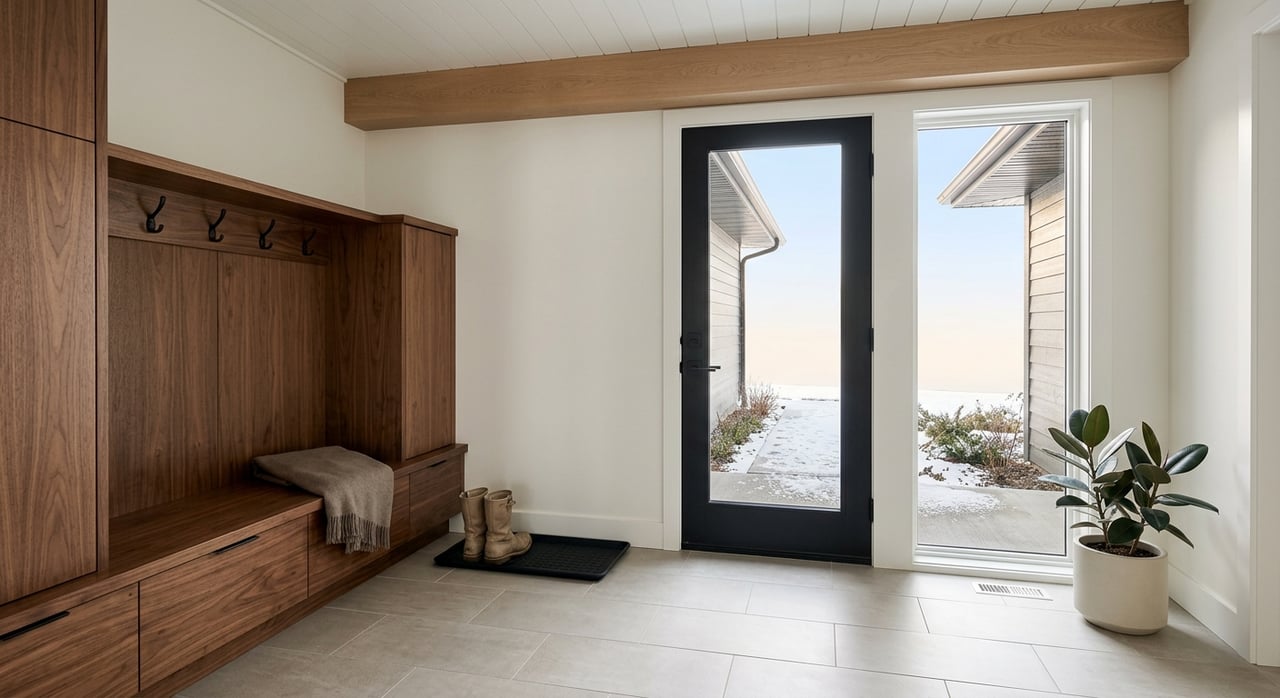
Many new homes in West Fargo share a practical, modern feature set. Current builder plans highlight open-concept living areas, large kitchen islands, walk-in pantries, mudrooms, upper-level laundry, finished or expandable lower levels, and two- or three-stall garages. These are the kinds of features many buyers now expect in a new build.
Examples from local builder pages show how wide the range can be. Jordahl’s Blair floor plan is a 1,686-square-foot rambler with 3 bedrooms, 2 baths, an open kitchen-dining-living area, a walk-in pantry, a mudroom, and a separate laundry room. On the larger end, Jordahl’s Monroe plan offers 2,750 square feet with 5 bedrooms, 3.5 baths, a mudroom, and an upstairs primary suite.
Other plans show different layouts and finish priorities. Brookstone’s Redstone is a three-level split with 3 bedrooms, 2 baths, 12-foot ceilings, a finished lower level, upper-level laundry, and an insulated 2-stall garage with a floor drain. Meanwhile, Verity’s Hadley Meadows community features townhomes and one-level twinhomes with optional basements, plus lawn care and snow removal.
One of the biggest things to know about new construction in West Fargo is that there is no single price point. Builder pages show a meaningful spread depending on community, lot, size, and finish level. That makes it important to compare more than just the starting price.
In Brookstone’s Wilds 21st Addition listings, current asking prices shown on the builder page are roughly $297,900 to $363,650. Jordahl’s Wilds listings, by comparison, show homes around $429,990 and $499,435. These are builder-site asking prices rather than market-wide averages, but they give you a helpful snapshot of how quickly pricing can shift.
The base price is only part of the budget. Lot premiums, upgrades, appliances, finish selections, and site-related items can all affect your final number. If you are comparing two homes in the same area, make sure you understand what is included and what will cost extra.
Closing costs matter in new construction just as much as they do in resale. The Consumer Financial Protection Bureau says closing costs typically run about 2% to 5% of the purchase price. For a home that is not yet complete, the builder may also require an upfront deposit or earnest money.
The CFPB also notes that you do not have to use a builder’s affiliated lender. That can be an important point if you want to compare loan options or fees. It is also smart to ask exactly when a deposit becomes refundable, and under what conditions.
Another key local cost is special assessments. West Fargo explains that special assessments are used to allocate infrastructure costs to property owners who benefit from improvements, and pending assessments are only estimates until they are certified. If you are buying in a newer subdivision, ask early whether the lot has pending or certified assessments and how those costs will be handled.
West Fargo offers a local property tax incentive that may apply to qualifying buyers of new construction. The city says first-time owner-occupants of a new construction home may qualify for a reduction on part of their property taxes for the first two years after occupancy. State guidance tied to the city program says the exemption can apply to certain new single-family, condominium, and townhouse properties for the first two taxable years after completion and first occupancy, with a cap of $150,000 of improvement value, while land remains taxable.
The city also offers a builder exemption that can reduce property taxes for one year while a home is being constructed or marketed. You can review the city’s property tax incentive details here. If you are considering a new build, it is worth confirming whether the specific property qualifies and what steps are required.
A new-construction purchase usually has more moving parts than a resale purchase. The contract may come first, then selections, then permitting, then construction milestones, then final completion. That longer runway can be helpful if you want customization, but it also requires patience and clear expectations.
A useful benchmark comes from the National Association of Home Builders. In 2023, the average time to complete a single-family home in the U.S. was 10.1 months, and homes built for sale averaged 8.9 months. That is a national figure rather than a West Fargo-specific one, but it gives you a realistic frame: new construction is usually a months-long process, not a quick closing.
West Fargo’s local permit process adds another layer. The city’s residential plan-routing packet requires multiple plan sets, a residential building permit application, a stormwater management application, energy compliance worksheets, site plans, and construction drawings. The city also notes that incomplete applications can delay review and permitting, and that the application itself is not permission to begin construction.
Because new construction has more steps, your contract details matter even more. The CFPB recommends making the purchase contract contingent on financing and a satisfactory inspection. That helps protect you if your loan changes or if the home is not delivered in acceptable condition.
You should also ask how design selections work, when change orders are allowed, and what happens if completion is delayed. Builder process pages in the research show that some companies use guided design-center meetings, while others move from discovery to signed purchase agreement before construction begins. The more you understand the path upfront, the easier it is to plan your budget and your move.
Site work is another area to pin down in writing. West Fargo’s engineering information notes that some work such as sidewalks, driveways, grading, or drainage may involve additional coordination or permits depending on the project. That is why you want a clear answer on what the builder includes before closing and what, if anything, you may need to finish afterward.
When you tour a model home, it is easy to focus on finishes and layout. Those things matter, but your best questions usually relate to cost, timing, and what is actually included. A polished model can show features that are upgrades, not standard items.
Bring a short list and take notes. These questions can help you compare builders and communities more clearly:
The best way to approach new construction in West Fargo is to compare the full picture, not just the brochure. Look at location, home type, standard features, lot pricing, assessments, tax incentives, and expected completion window. A lower starting price does not always mean a lower final cost.
It also helps to go in with a plan for your priorities. If you care most about low-maintenance living, attached options like townhomes or one-level twinhomes may deserve a closer look. If you want square footage, garage space, or a larger lot, detached single-family communities may be the better fit.
New construction can be a great option when you want modern layouts, newer systems, and the chance to personalize some details. If you want help sorting through builders, comparing communities, and asking the right questions before you commit, Luke Haldis can help you move forward with a clear strategy.
Stay up to date on the latest real estate trends.
You benefit from a disciplined, client-first strategy built to protect your interests and grow your long-term wealth. Through proactive outreach and deep local relationships, you gain access to off-market and early opportunities most buyers and sellers never see. Every decision is guided by clarity, transparency, and a proven process designed to help you move forward with confidence and control.