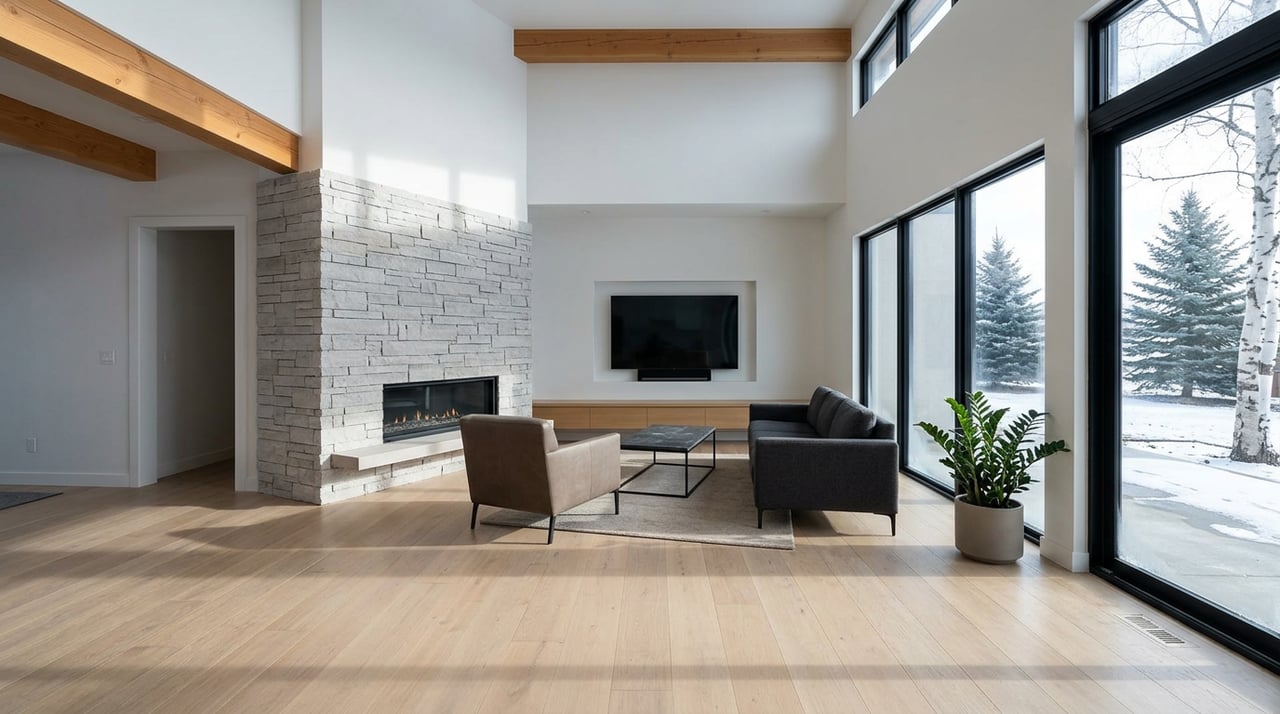
Evaluating Horace ND Investment Properties with Confidence
March 5, 2026
March 5, 2026
Thinking about buying a rental or house-hack in Horace but not sure how to run the numbers? You are not alone. Horace is growing fast, and it can be hard to tell if a property will cash flow, appreciate, or both. In this guide, you will learn a simple process to comp sales and rents, understand local rules, estimate expenses, and evaluate returns with confidence. Let’s dive in.
Horace has expanded quickly in the Fargo–Moorhead metro. The latest U.S. Census estimates put the population at about 6,286 as of July 1, 2024, with a high owner-occupancy rate near 94.4% and a strong median household income around $138,578. These facts signal a stable, primarily owner-occupied market with steady demand for quality housing. You can confirm these figures on the U.S. Census QuickFacts page for Horace.
New subdivisions continue to appear as Horace rezones land and processes building permits. This affects short-term supply, pricing, and vacancy. Before you assume a property type is allowed on a given parcel, review the City of Horace Land Use Ordinance and check the permit history.
Bottom line: Horace is a suburban, owner-occupied market with fewer existing duplexes and triplexes than a big city. That setup can work well for a house-hack or a newer 1–4 unit, but you need precise comps and a conservative rent and expense model.
Start with zoning. Zoning has shifted in recent years as Horace annexed land and approved new plats. Do not assume a conversion or small multifamily is allowed. Confirm the current zoning district and permitted uses for your specific parcel with the City of Horace Planning and Zoning staff and by reviewing the city’s ordinance library.
If you plan to rent any unit, remember that North Dakota landlord-tenant law applies statewide. The North Dakota Attorney General provides plain-language guidance on deposits, notices, and habitability standards. Review those requirements early and set your lease and deposit handling to match state rules.
Public portals often show Horace single-family values in the low-to-mid $400k range, though month-to-month medians can shift. Use this as a starting band for expectations, then verify with an MLS comparative market analysis from a local agent.
For rents, recent listings for 3-bedroom homes commonly fall in the roughly 1,900 to 2,500 dollars per month band, depending on size, finish, and garage. As a third-party check, compare your target bedroom count to HUD Fair Market Rents for Cass County.
Pull recent closed sales. Find 3 to 6 closed comps from the same subdivision or an immediately comparable one in the past 3 to 12 months. Match bedrooms, baths, finished square feet, age, lot size, and garage type. Ask a local agent for an MLS CMA for the most accurate set.
Normalize on price per finished square foot. Create a simple table for your comps with sold price, finished square feet, and price per square foot. Adjust for meaningful differences, such as a finished basement, a third garage stall, or an extra full bath. Use an agent or appraiser for precise adjustments.
Estimate ARV if renovations are needed. If you plan to update flooring, paint, or fixtures, use the most similar “like-new” comps to set your after-repair value. Subtract your estimated renovation budget to find a target maximum purchase price.
If your most similar comps average about $205 per finished sq ft, your ARV for 2,000 sq ft is roughly $410,000. If you plan to spend $15,000 on light updates, a purchase in the 395,000 range might align with the market once work is complete. Numbers are illustrative, so always confirm with local MLS comps.
Gather 3 to 6 active rent comps. Match bed and bath count, garage, and basement finish. Consider lease term, whether the unit is furnished, and who pays which utilities.
Cross-check with HUD FMR. Use the HUD Fair Market Rents for Cass County as a second opinion on your range.
Apply a vacancy factor. In a stable suburban setting, a 5 to 8 percent vacancy allowance is a conservative starting point. If listings are sitting longer, push higher.
Understand lending treatment for house-hacks. If you plan to live in one unit of a 2–4 unit property, ask your lender how they will count projected rents. Many lenders use 75 percent of projected rent for qualifying under FHA rules. Policies vary by lender.
Use this effective figure to model expenses and returns.
Common expense assumptions when modeling:
Assume a $395,000 purchase, $2,200 monthly rent, 6 percent vacancy, and outsourced management.
Estimated NOI: $24,816 − ($2,112 + $2,112 + $5,535 + $1,800) ≈ $13,257
These numbers are for demonstration. Run your own model with actual quotes and the current tax mill total for the specific parcel.
North Dakota’s property tax math uses a two-step formula:
Example: If true and full value is $410,000, taxable value is $18,450. If the consolidated mill total were 300, taxes would be $18,450 × 0.300 = $5,535. Check the actual mill total on the parcel’s tax record before you finalize underwriting.
Learn more: North Dakota Tax Commissioner’s residential property tax guide.
Special assessments can appear on the tax bill and may span many years. Review the parcel record and any city assessment notices. For water, sewer, and municipal services, visit the City of Horace website for current utility information.
Most Horace homes are newer suburban construction. Even so, ask your inspector and contractor to focus on items that drive operating costs and durability in a cold climate:
Furnace and heating capacity. Confirm age and service history.
Basement moisture and drainage. Check sump pumps, window wells, and grading.
Insulation and windows. Energy efficiency affects tenant comfort and your utility exposure.
Roof, garage door, foundation, and exterior cladding. Freeze-thaw cycles can stress materials.
Appliances and mechanicals. If you plan to use FHA 203(k) financing for improvements, confirm eligible repairs and documentation.
City permits: Review the City of Horace permits and inspections resources and check the SmartGov portal for permit history.
FHA info: Explore HUD single-family program overviews for renovation and owner-occupant options.
Use this quick list before you write an offer:
Ready to evaluate a specific Horace property, comp the numbers, and plan your next step? Reach out for a pressure-free consult. You will get a clear process, practical comps, and a game plan that fits your goals. Connect with Luke Haldis to get started.
Stay up to date on the latest real estate trends.
You benefit from a disciplined, client-first strategy built to protect your interests and grow your long-term wealth. Through proactive outreach and deep local relationships, you gain access to off-market and early opportunities most buyers and sellers never see. Every decision is guided by clarity, transparency, and a proven process designed to help you move forward with confidence and control.